
How to make turbo training more bearable (and actually effective).

Updated: May 19
We break down how to put a postive spin on the consistent gloomy months on the ERG and why the suffering is all worth it.

Tip 1: Know Your Why
When you’re staring down a long or demanding trainer session, your why matters more than anything else.
Indoor rides are where motivation is tested, not because the work isn’t valuable, but because it’s stripped of scenery, caf stops (which we at LOVE at Belmont Performance), and social distraction. This is exactly where having a clear goal becomes powerful. If motivation dips, zoom out. Look at the bigger picture.
This single session isn’t the whole story—it’s one piece of a much bigger puzzle. You’re laying foundations now for riding well in spring and summer, for feeling strong when it actually counts. Remind yourself that this goal was a conscious choice. You chose the process, and sessions like this are part of the deal.
Instead of focusing on how long is left, focus on the emotional win of completing the session. Then connect that feeling to the larger pay-off of achieving your goal. When you frame today’s ride as an investment in the long game, it becomes far more manageable.
Tip 2: Embrace the Trainer
Modern smart trainers—such as the Wahoo KICKR or Tacx Neo—are not compromises. They are precision tools.
While riding indoors may never match the enjoyment of being outside, it is often the most efficient way to train. No traffic, no interruptions, no freewheeling. Just clean, structured work that directly targets your goals.
Training has become increasingly scientific, and the turbo allows you to execute sessions exactly as prescribed. Power targets are precise, intervals are controlled, and progress is measurable. When you understand this, the trainer stops being something you “have to do” and becomes something that actively helps you improve.
Reframe the mindset. You’re not stuck indoors—you’re choosing one of the most effective training environments available.
Tip 3: Start Hard, Then Add Distractions
For long indoor sessions, this may be the most important strategy: manage stimulation deliberately.
Avoid heavy dopamine hits before you start. Endless doom-scrolling or bingeing content before riding makes the trainer feel even more monotonous by comparison. Instead, get on with minimal distractions and let your brain adapt to the effort.
Once you’re riding, gradually layer in distractions.
Save your best ones for later in the session and use them as a reward—a carrot to pull you through the hardest parts.
Platforms like Zwift or MyWhoosh can be especially useful. Even if you’re riding solo, knowing that thousands of others around the world are also grinding away towards their goals makes it feel less like you versus the bike.
Music Matters
Well it wouldn't be a Belmont Performance article without some science! There’s solid evidence behind this too. In a 2024 study by Labudović et al., exercising with music significantly increased VO₂peak, heart rate, test duration, and performance at key physiological thresholds compared to exercising without music.
Translation: music helps you work harder for longer. For tough sessions, choose tracks that energise you emotionally—not background noise, but music that actually lifts your effort.
Tip 4: Make It Comfortable (and Easy to Start)
Hard training shouldn’t be physically uncomfortable.
Start with your setup. Your indoor position should closely match your outdoor bike fit.
Small discrepancies feel much bigger when you’re static for long periods.
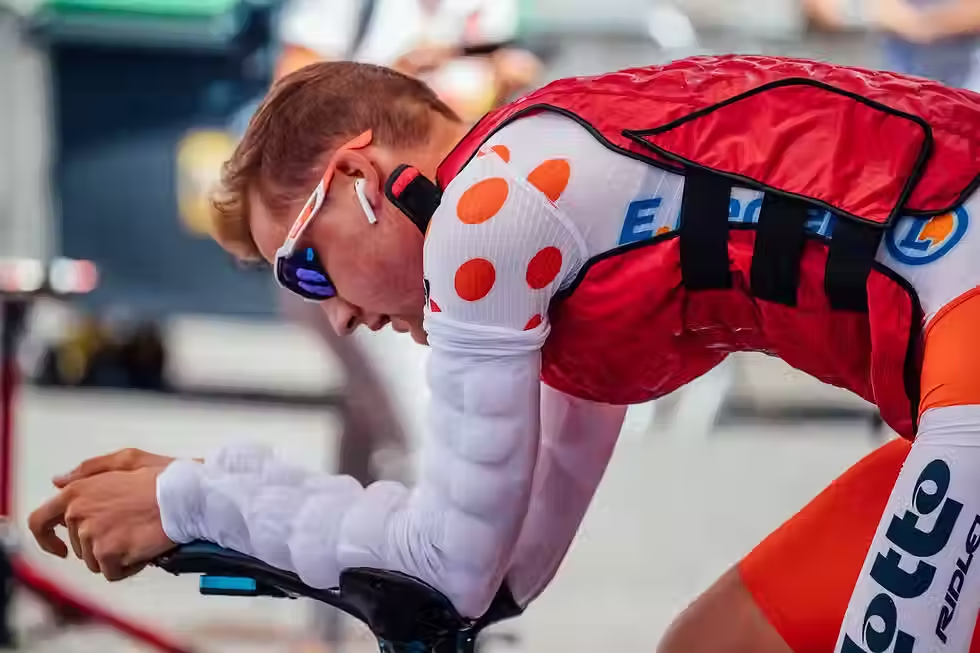
Cooling is non-negotiable. Overheating is one of the fastest ways to fail a session. Train in a cool, well-ventilated space and use at least one fan—ideally more. If indoor riding is a winter staple for you, investing in better cooling (even an ice vest) can make a significant difference. A cool rider is a rider who hits their numbers.
For very long trainer rides, consider a short mid-ride break. A quick stretch, a coffee, or even a shorts change can dramatically improve comfort. Unlike outdoor riding, the turbo offers almost no natural micro-rests, so adding one intentionally won’t harm your training—and may save the session.
Finally, reduce friction. Keep your bike clean, set up, and ready to go. Whether it’s before or after work, the easier and more inviting it is to start, the more consistent you’ll be. Consistency, not hero sessions, is what delivers results.
Final Thoughts
Turbo training will probably never replace your best outdoor rides—but it doesn’t need to. When you connect each session to a bigger purpose, appreciate the precision of indoor training, manage stimulation wisely, and optimise comfort, indoor riding becomes a powerful tool rather than a necessary evil.
Do that, and those winter sessions won’t just get done—they’ll pay off when it matters most.

Love